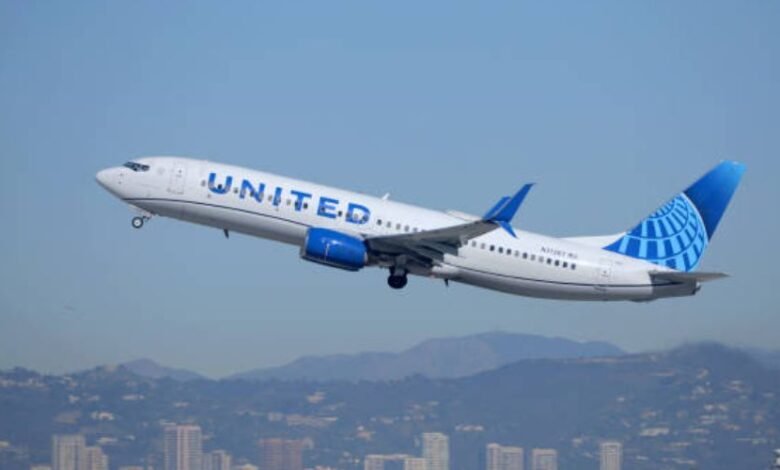
Long-haul flights across the Pacific are among the most carefully planned operations in commercial aviation. Routes such as the United Airlines service from Christchurch, New Zealand, to San Francisco demand precise coordination of crew scheduling, aircraft performance, fuel planning, maintenance readiness, and meteorology. When everything aligns, the journey is smooth and predictable. But aviation is an industry in which even small disruptions can create cascading operational consequences. One such example occurred when United flight UA731, scheduled to travel non-stop from Christchurch to San Francisco, diverted unexpectedly to Honolulu.
This article explores the circumstances surrounding the diversion, the operational factors involved, the passenger experience, and the broader implications for international flight operations. While diversions may seem dramatic to the traveling public, they are often the product of conservative safety culture, regulatory compliance, and logistical decision-making. The Christchurch–San Francisco diversion to Honolulu is an excellent case study in how these complex systems work in practice.
Overview of the Christchurch–San Francisco Route
A Young but Strategically Important Connection
United Airlines’ direct route between Christchurch (CHC) and San Francisco (SFO) has become a valuable link between the United States and New Zealand’s South Island. Operated seasonally, the service typically uses a Boeing 787 Dreamliner, a long-range twin-engine aircraft designed for efficiency and transoceanic capability.
The route is significant for several reasons. It connects one of New Zealand’s fastest-growing tourism regions with Northern California’s economic hub. It bypasses the congested routes through Auckland, offering passengers a more direct experience. For United Airlines, the service strengthens its Pacific network and appeals to both leisure travelers and business passengers.
Operational Characteristics of Long-Haul Pacific Flights
Flying from Christchurch to San Francisco requires meticulous planning. The journey traverses remote stretches of the Pacific, meaning:
- Diversion airports are limited and spaced far apart.
- Crew duty-time regulations must account for unusually long flight durations.
- Aircraft must comply with ETOPS requirements for twin-engine operation over remote areas.
- Any technical irregularity may require adjusting the route or landing at the nearest suitable airport.
Honolulu is one of the most commonly used diversion points for trans-Pacific operations. It offers extensive maintenance facilities, medical resources, and the ability to accommodate large numbers of passengers. This makes it a logical choice when a flight requires an unplanned landing.
The Incident: Why UA731 Diverted to Honolulu
Initial Flight Operations
United flight UA731 departed Christchurch with a scheduled destination of San Francisco. The aircraft type—generally the Boeing 787-8 Dreamliner—was fully capable of flying the route nonstop. Early stages of the flight proceeded normally. However, an issue developed during the journey that prompted the flight crew to divert.
Publicly available information later indicated two complementary explanations: an operational issue related to the aircraft and a crew duty-time limitation that became impossible to meet under the unfolding circumstances.
Understanding “Operational Issues” in Aviation
The term “operational issue” may sound vague but often refers to any situation that affects the airline’s ability to complete a flight as planned. This can include minor maintenance irregularities, systems warnings that require monitoring, or conditions that—while not immediately hazardous—require the aircraft to land sooner than anticipated.
For a long-haul flight over remote oceanic regions, even a minor technical discrepancy may justify diversion to ensure compliance with safety standards. Airlines and pilots operate under a philosophy of caution, preferring to err on the side of over-safety rather than risk exacerbating a potential problem over the open ocean.
In this incident, available reports suggested that the aircraft experienced a technical or maintenance-related concern. Though not involving any immediate emergency, this issue influenced the decision to divert to Honolulu, a major Pacific operations center.
Crew Duty-Time Constraints: An Overlooked Contributor
In addition to the technical aspect, several reports indicated that crew duty-time limitations contributed to the diversion. International flight crews are strictly regulated under safety policies that prevent pilots and cabin crew from exceeding maximum working hours. These rules ensure that fatigue does not compromise safety during demanding long-haul operations.
If a flight experiences delays before departure—whether maintenance delays, weather-related issues, or procedural setbacks—it can shift the crew’s duty window in ways that make completing the full journey impossible.
For example, if the total projected duty time would exceed legal limits before reaching San Francisco, the airline must adjust the route. Honolulu, being geographically closer and operationally equipped, becomes the ideal intermediate landing point for a crew change.
Thus, the final decision to divert likely resulted from a combination of:
- A maintenance or technical issue requiring attention
- Crew duty-time that could no longer legally allow the completion of the original route
This dual-factor explanation aligns with the information available and with standard aviation protocol.
Inside the Diversion Decision: Safety, Logistics, and Timing
Why Honolulu?
Honolulu International Airport (HNL) serves as a crucial hub for Pacific diversions. Its advantages include:
- Extensive facilities capable of handling wide-body aircraft
- Availability of Boeing-qualified maintenance crews
- Ability to house, transport, and support hundreds of passengers
- A large United Airlines presence to assist with re-routing
- Geographic position that minimizes additional flight time under diversion circumstances
For a flight positioned mid-Pacific, Honolulu is often the most suitable option in terms of safety, convenience, and operational support.
Passenger Experience During the Diversion
From passenger accounts and available summaries, the diversion was orderly and handled professionally:
- Cabin crew kept passengers informed of the change in plans.
- The landing in Honolulu proceeded normally, without emergency protocol.
- After landing, passengers disembarked and were assisted by ground staff.
- United coordinated onward travel using a continuation flight, designated UA3024, to complete the journey to San Francisco.
Approximately 200 passengers and over a dozen crew members were involved. The airline reportedly provided updated itineraries, guidance, and accommodations where needed.
Continuation to San Francisco
Once the aircraft and crew situation was resolved, passengers completed their journey from Honolulu to San Francisco aboard the continuation service. This ensured minimal additional disruption, though arrival times were later than originally scheduled.
United Airlines, like many major carriers, typically offers compensation or trip adjustments depending on the delay duration and regional consumer protections. Even though this incident stemmed from operational safety considerations, airlines still work to support travelers affected by unexpected diversions.
Operational and Safety Lessons from the Diversion
Long-Haul Aviation Relies on Conservative Decision-Making
Aviation safety philosophy dictates that even slight anomalies are treated seriously. This diversion demonstrated that:
- Long-haul flights across remote oceanic areas lack nearby airports, making early and decisive action essential.
- Technical or operational concerns—even those not posing immediate danger—can influence route decisions.
- Airlines prefer precautionary diversions over attempting to complete a full transoceanic route under uncertain conditions.
Crew-Duty Management Is Critical on Long Flights
The Christchurch–San Francisco route is lengthy enough that minor delays can shift duty-time calculations dramatically. When combined with operational disruptions, a diversion may become the only legally permissible choice.
Crew fatigue management is so foundational to aviation that breaking duty-time regulations is non-negotiable. Airlines must ensure that both flight-deck and cabin crew remain within allowed limits.
This incident shows how crew-time compliance can be the driving factor behind major route changes, even when the aircraft seems otherwise capable of reaching its destination.
Honolulu’s Strategic Importance to Pacific Flight Operations
This event highlights Honolulu’s role as:
- A maintenance-ready location
- A refuge airport for trans-Pacific flights
- A logistical center capable of handling diverted passengers
- A midpoint that supports safe resolution of inflight irregularities
Many airlines rely on Hawaii as an essential part of their operational safety net. Without such airports, airlines would face far more complex challenges operating long-range Pacific networks.
Impact on Passengers and Airline Operations
Passenger Impact and Perception
While diversions can be inconvenient, passenger narratives often emphasize that:
- The situation felt controlled and non-emergency in nature.
- Crew communication was steady and reassuring.
- Hospitality services in Honolulu were adequate and organized.
For many travelers, the unexpected stop even became a memorable—if unplanned—element of their journey.
Airline Response and Public Communication
United Airlines managed the event according to typical diversion protocol:
- Provided passengers with rebooking and assistance
- Issued operational summaries stating the general cause
- Avoided releasing overly specific technical information, as is customary in maintenance-related situations
Airlines rarely disclose granular details of aircraft issues unless required by regulators; however, they consistently emphasize that safety was never compromised.
Operational Ripple-Effects
A diversion of a long-haul aircraft affects:
- Crew scheduling for subsequent flights
- Aircraft positioning for future routes
- Gate and airport slot management
- Maintenance team workload
- Fuel consumption and logistics planning
Though passengers may see only the surface-level disruption, diversions generate complex behind-the-scenes adjustments across the airline’s network.
Wider Significance of the Christchurch–SFO Diversion
This incident was not a major aviation emergency, yet it remains noteworthy because it demonstrates the intricacies of long-haul airline operations. It highlights how modern commercial aviation prioritizes safety and compliance, and how multiple small factors—technical, regulatory, and operational—can intersect to reshape an entire flight plan.
For the Christchurch–San Francisco route, the diversion also underscores the challenges of operating ultra-long-haul flights from New Zealand, where outbound U.S. connections often involve lengthy crew duties and careful aircraft utilization. Even with advanced aircraft like the Boeing 787 Dreamliner, operational flexibility remains a cornerstone of safe flight execution.
Ultimately, the diversion to Honolulu showcases the reliability of aviation systems. When irregularities arise, airlines activate structured procedures designed to protect passengers, crews, and aircraft. The result may be an unplanned stop, but it is also proof that the system functions exactly as intended.
Frequently Asked Questions
Why did the Christchurch–San Francisco United flight divert to Honolulu?
The diversion occurred due to a combination of an operational or technical issue on the Boeing 787 and crew duty-time limitations. These factors made it necessary and legally required to land in Honolulu rather than continue to San Francisco.
Was the diversion an emergency?
No. Although unplanned, the landing in Honolulu followed standard procedure and did not involve emergency declarations. Passengers disembarked normally, and the incident was handled as an operational precaution.
How common are diversions on Pacific long-haul flights?
While not everyday occurrences, diversions are an expected part of Pacific aviation. Technical alerts, medical emergencies, and crew-time constraints can all trigger rerouting to Honolulu or other suitable airports.
What happened to passengers after landing in Honolulu?
Passengers were rebooked onto a continuation flight to San Francisco. The airline provided assistance, guidance, and support while managing the transition to the next segment of the trip.
Did the aircraft have a serious technical failure?
Public information suggests the issue was not severely dangerous but required attention. Airlines often withhold detailed technical data, but available reports indicate that the diversion was precautionary, not the result of a critical failure.