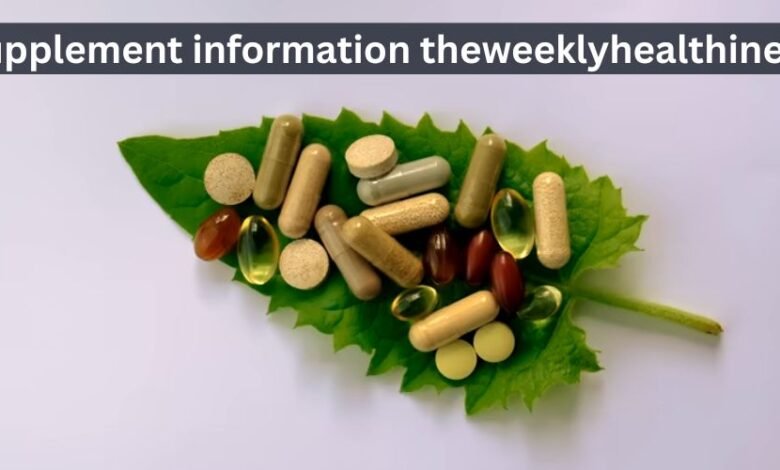
In today’s fast-moving world, staying healthy has become both a priority and a challenge. Busy schedules, processed food habits, nutrient-depleted soils, stress, and environmental factors often limit our ability to get optimal nutrition from food alone. This is where the importance of supplements enters the conversation. “Supplement Information TheWeeklyHealthiness” has become a widely searched topic because people want reliable, easy-to-understand guidance about supplements and their role in daily health.
TheWeeklyHealthiness focuses on presenting supplement knowledge in a simple, practical, and health-conscious way. It aims to educate everyday individuals about how supplements support the body, what different types exist, who should take them, and how to use them safely. This article explains everything you need to know about supplement information as presented in the context of TheWeeklyHealthiness—clearly, carefully, and in complete detail.
Understanding Supplements in Modern Health
Supplements are products that support nutritional intake alongside regular food. They are not meant to replace balanced meals, but rather to fill nutritional gaps that may develop due to lifestyle, age, medical conditions, or dietary choices. Today, supplements come in many forms, including tablets, capsules, powders, liquids, and gummies.
TheWeeklyHealthiness treats supplements as support tools, not miracle cures. The purpose of supplement information is to help people understand what they are consuming and why. Proper education ensures supplements are used responsibly, effectively, and safely within a long-term wellness lifestyle.
The Philosophy Behind Supplement Information TheWeeklyHealthiness
TheWeeklyHealthiness follows a balanced and mindful approach toward supplementation. Instead of promoting excessive or unnecessary product usage, it encourages people to:
- Understand their body’s nutritional needs
- Learn the function of each supplement
- Use supplements only when necessary
- Focus on long-term health rather than short-term results
The philosophy is rooted in prevention, education, and consistency. Supplements are viewed as support companions to a healthy lifestyle that includes proper diet, hydration, exercise, and sleep.
Why Supplement Information Matters More Than Ever
Modern food systems have changed dramatically. While food availability has increased, nutrient density has often declined. Many individuals unknowingly suffer from hidden deficiencies due to poor food quality, stress, digestive issues, or restrictive diets.
Supplement information helps people recognize symptoms of deficiencies, understand nutrient roles, and make informed decisions instead of guessing. Without proper guidance, supplements may be misused, overdosed, or combined unsafely. This is why clear, trustworthy education like that promoted by TheWeeklyHealthiness is critical.
Common Types of Supplements Covered by TheWeeklyHealthiness
Vitamins and Their Functions
Vitamins are organic nutrients required in small amounts for normal body function. Each vitamin plays a unique role. For example, vitamin A supports eye health, vitamin C strengthens immunity, vitamin D supports bone health, and the B-complex group plays a major role in energy production.
TheWeeklyHealthiness emphasizes that vitamin needs vary based on age, gender, diet, and lifestyle. Someone who avoids sunlight may need more vitamin D, while someone under stress may require more B vitamins.
Minerals and Their Importance
Minerals are inorganic elements necessary for body structure and function. Calcium supports bones, magnesium assists muscle relaxation and nerve function, iron carries oxygen in the blood, and zinc strengthens immunity.
TheWeeklyHealthiness explains that mineral imbalances are increasingly common due to poor food quality and digestive issues. Responsible supplementation can restore balance when natural food sources fall short.
Herbal Supplements and Natural Extracts
Herbal supplements are derived from plants and used for centuries in traditional medicine. Examples include turmeric for inflammation, ashwagandha for stress, ginseng for energy, and ginger for digestion.
Supplement Information TheWeeklyHealthiness treats herbs with caution and respect. While natural, herbs can still interact with medications and should be selected carefully and used with proper awareness.
Protein and Amino Acid Supplements
Protein supplements are widely used by athletes, fitness enthusiasts, and individuals with higher protein needs. Amino acids support muscle repair, tissue building, and hormone production.
TheWeeklyHealthiness highlights that protein supplements should complement balanced meals rather than replace natural food sources entirely.
Probiotics and Digestive Support
Gut health is central to overall wellness. Probiotics provide beneficial bacteria that support digestion, immunity, nutrient absorption, and mental well-being.
TheWeeklyHealthiness highlights that probiotics are especially useful for people experiencing bloating, digestive irregularities, weakened immunity, or antibiotic-related imbalance.
How Supplements Affect the Human Body
Supplements work by restoring nutrient availability where natural intake falls short. When deficiencies are corrected, the body often shows improvements in energy, sleep, immunity, skin health, mental clarity, and physical strength.
However, TheWeeklyHealthiness also stresses that supplements should work with the body, not override it. Consistency, accurate dosing, and proper pairing with meals are crucial for safe absorption and benefit.
Who Benefits Most from Supplements
Supplements are not only for unhealthy people. Many healthy individuals still benefit due to lifestyle demands or age-related changes. Common groups that benefit include:
Older adults with reduced nutrient absorption
People following vegan or vegetarian diets
Pregnant or breastfeeding women
Athletes with increased demand
Individuals with digestive disorders
People under high stress
Those with limited sun exposure
TheWeeklyHealthiness emphasizes that supplementation should match personal needs instead of following trends.
Understanding Safe Dosage and Usage
One of the most important aspects of supplement information is dosage control. More is not always better. Excess intake of certain vitamins and minerals can cause imbalance and health risks.
TheWeeklyHealthiness educates users to:
Follow recommended dosage guidelines
Avoid mixing multiple supplements with similar ingredients
Pay attention to meal timing for better absorption
Track how the body responds over time
Responsible use leads to better outcomes and prevents long-term complications.
The Role of Supplements in Preventive Health
Supplements play a growing role in preventive health care. By addressing minor deficiencies early, individuals can prevent serious health conditions later.
For example, maintaining adequate vitamin D helps reduce bone loss, magnesium supports heart rhythm, and omega fatty acids support brain health. TheWeeklyHealthiness presents supplements as a preventive shield rather than a reactive solution.
Supplements vs Whole Foods: TheWeeklyHealthiness Perspective
TheWeeklyHealthiness clearly states that supplements cannot replace real food. Whole foods contain complex fiber, enzymes, antioxidants, and synergistic nutrients that supplements cannot fully mimic.
However, supplements become essential when:
Diet alone cannot meet requirements
The body cannot absorb nutrients properly
Life stages demand increased intake
Environmental stress drains nutrient stores
The ideal approach is food-first with supplement backup.
Reading Labels and Understanding Ingredients
A major part of supplement information is learning how to read supplement labels. TheWeeklyHealthiness promotes awareness of:
Serving size
Active ingredient concentration
Additives and fillers
Source of ingredients
Expiration dates
Understanding labels helps users avoid unnecessary chemicals and low-quality formulations.
The Importance of Lifestyle Alongside Supplements
Supplements alone cannot fix an unhealthy lifestyle. TheWeeklyHealthiness integrates supplement use with:
Balanced nutrition
Daily movement
Adequate hydration
Stress management
Quality sleep
Supplements act as reinforcement, not a replacement.
Long-Term Benefits of Smart Supplementation
When used properly, supplements can offer long-term advantages such as:
Stronger immunity
Improved energy levels
Better mental focus
Healthier skin and hair
Balanced hormones
Improved joint mobility
Consistent digestive health
TheWeeklyHealthiness emphasizes that results appear with consistency and patience, not overnight use.
Risks of Over-Supplementation
One of the most overlooked dangers is excessive supplementation. Some users assume supplements are automatically safe. In reality, excessive intake of vitamins like A, D, iron, or zinc can cause toxicity.
TheWeeklyHealthiness highlights the importance of moderation, symptom awareness, and periodic health monitoring.
Supplement Myths Addressed by TheWeeklyHealthiness
Supplement information also aims to correct misinformation. Common myths include:
Supplements work instantly
Natural means always safe
More dosage means better results
Everyone needs the same supplements
Supplements cure diseases
TheWeeklyHealthiness clarifies that supplements support health but are not medical cures.
The Growing Awareness of Supplement Education
As people become more proactive about health, demand for reliable supplement education grows. TheWeeklyHealthiness reflects this shift by focusing on:
Preventive care
Education-based decisions
Natural health support
Long-term wellness thinking
This shift marks a move away from quick fixes toward sustainable health.
Future of Supplements and Health Awareness
With increasing research, personalized nutrition is becoming more common. TheWeeklyHealthiness prepares readers for a future where supplement routines will be tailored based on genetics, lifestyle, and individual health markers.
Frequently Asked Questions About Supplement Information TheWeeklyHealthiness
What is the main goal of supplement information according to TheWeeklyHealthiness?
The main goal is to educate people about safe, responsible, and effective use of supplements as part of a healthy lifestyle rather than as medical replacements.
Are supplements necessary for everyone?
No, supplements are not mandatory for all individuals. They are recommended based on personal needs, lifestyle, diet quality, and health conditions.
Can supplements replace a healthy diet?
No, supplements cannot replace whole food nutrition. They only support dietary gaps when regular food intake is insufficient.
How long does it take to see results from supplements?
Results vary depending on the type of supplement, individual health condition, and consistency. Most visible benefits appear within a few weeks to a few months.
Is it safe to take multiple supplements daily?
It can be safe if done cautiously with awareness of overlapping nutrients and proper dosage. Overuse without guidance can cause health risks.