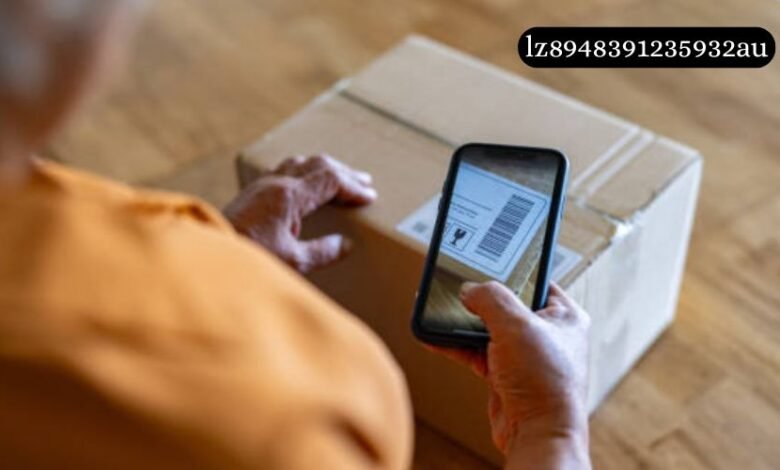
Tracking numbers have become a fundamental part of today’s global shipping experience. Every parcel’s identity, journey, and verification depend on these alphanumeric codes, and one that frequently appears across tutorials and explanatory articles is LZ8948391235932AU. Although it may not always represent an active shipment, it has gained widespread recognition as a sample number used to illustrate how international tracking works, especially within systems involving Australia Post and its global logistics partners. Because it mirrors the structure of real tracking identifiers, people often wonder about its purpose, meaning, and background. This article provides a comprehensive and detailed exploration of the number, offering clarity for anyone curious about its origin or its significance.
Understanding the Origin and Purpose of LZ8948391235932AU
The tracking number LZ8948391235932AU follows a standard format used for many Australia-origin international shipments. International postal systems often rely on a combination of letters and numbers that identify both the parcel type and its country of origin. Over time, this specific number has appeared repeatedly in online discussions because content creators, tracking-tool reviewers, and logistics educators often use it to demonstrate how a tracking code works, especially when explaining cross-border shipping. Although tracking numbers are usually tied to individual parcels, this one has become a recognizable example in the public domain.
What makes this number particularly interesting is the way it showcases the essential components of a global postal identifier. Rather than being random, its structure reveals information about the service level and its origin. The blend of letters and numbers is not arbitrary; it represents a carefully designed system that helps carriers around the world stay synchronized. Because the number is widely circulated online, many people mistakenly assume it has special significance, but its prominence mostly comes from its role as a teaching reference.
Breaking Down the Structure of the Tracking Number
A tracking number is more than a code; it is the digital identity of a parcel. To comprehend LZ8948391235932AU, it is helpful to understand the meaning behind each of its segments. The opening two letters, “LZ,” often correspond to a particular service category within Australia Post’s international shipping system. While not all prefixes represent the same service type across every nation, the “L” family of prefixes is typically associated with tracked international shipments that follow a cost-efficient yet reliable delivery method. The letters make it easy for carriers, sorting facilities, and automated systems to instantly determine what type of parcel they are handling.
The long string of numbers following the prefix represents the unique identification sequence assigned to that specific shipment. This numeric section distinguishes one parcel from millions of others processed through international logistics networks. Each time a scanner detects the code on a label, the data points generated flow back into carrier databases, ensuring that the parcel’s movement can be recorded, verified, and updated at every stage.
The final “AU” in the code is equally important. International carriers use standardized two-letter country identifiers, which adhere to globally recognized postal conventions. In this case, “AU” confirms the parcel’s origin as Australia. These suffixes ensure that systems across many nations can instantly interpret where a package started its journey, even when it passes through numerous facilities or enters the postal ecosystems of completely different countries.
How Tracking Numbers Function Within Global Postal Systems
A number such as LZ8948391235932AU is not simply placed on a parcel as a label; it becomes the center of an interconnected digital record. Parcel movement is recorded through a string of scan events that mark various stages of its transit. When a sender lodges a parcel, the system creates an initial record, which is then updated each time the package moves through a processing plant, enters an aircraft, reaches an international hub, undergoes customs evaluation, or arrives at the doorstep of the recipient.
The tracking number serves as the parcel’s passport, allowing every participating postal or courier service to recognize its identity and understand its history. Each nation’s system exchanges information through globally agreed protocols, ensuring that a package sent from Australia can be seamlessly handled by postal authorities in Asia, Europe, North America, or any other destination. Even though LZ8948391235932AU itself is often an illustrative example, it follows the exact same structural principles as a genuine, active international shipping identifier.
What makes global shipping possible on such a massive scale is this shared understanding among postal systems. Without a consistent method for identifying parcels, international trade and online commerce would be ineffective. The reliability of tracking numbers is one reason customers around the world feel secure when ordering products across borders.
The Typical Journey of a Parcel Represented by a Code Like LZ8948391235932AU
To fully appreciate the significance of such a tracking number, it helps to understand the journey it typically reflects. A parcel beginning its journey in Australia is first brought into the national postal network. It is received either at a post office counter, a parcel locker, or through a merchant’s business collection service. Once scanned for the first time, the parcel becomes traceable in Australia Post’s system. As it moves between sorting centers, its tracking number ensures that every facility can identify its next destination.
After processing, the parcel is directed toward the international outbound gateway. This is a critical step because it determines when the parcel will leave the country. Once assigned to a departing flight or freight container, the parcel enters what is often the longest period of its journey—international transit. Updates may slow down during this time, not because of inactivity, but because air transport logistics involve larger distances between scanning points.
When the parcel reaches the destination country, a new set of systems takes over. The tracking number is recognized by the local postal network because international carriers synchronize their codes to ensure compatibility. Customs authorities may inspect the parcel or evaluate its declared value. Clearance can be quick or lengthy, depending on the country’s regulations and the nature of the goods. After clearing customs, the parcel is absorbed into the local delivery structure, culminating in its arrival at the recipient’s address.
Although LZ8948391235932AU may not correspond to a parcel making this journey today, its format illustrates this entire lifecycle extremely well, which is precisely why many educational articles use it as an example.
Why This Tracking Number Appears in So Many Online Discussions
One of the reasons LZ8948391235932AU appears so frequently online is because instructional websites need realistic examples to demonstrate tracking procedures. A tracking number must look authentic to help users understand what they should expect to see when entering their own codes into tracking tools. This number became popular because it conforms to the expected structure, originates from a well-known postal system, and demonstrates how international tracking behaves across multiple networks.
Another reason for its popularity is the rise of global e-commerce content. Writers creating tutorials for package tracking, customs clearance, or explanation of shipping delays needed a sample code that would not pose security risks. Instead of using a customer’s real parcel number, they used a number that had already circulated publicly. Over time, this created a snowball effect, making LZ8948391235932AU one of the most referenced sample tracking numbers on the internet.
Consumers occasionally confuse this visibility with special significance, wondering whether the number belongs to a famous shipment or if it is connected to a widely publicized delivery incident. In reality, its popularity is simply the result of convenience and repetition. It functions as a safe and familiar placeholder.
The Importance of Tracking Numbers in E-Commerce and Logistics
Tracking numbers like LZ8948391235932AU are more than just status indicators for customers. They represent an indispensable part of the logistics ecosystem, ensuring accuracy, accountability, and consistency. For consumers, tracking numbers bring reassurance by offering visibility. When shoppers order goods online, especially from international sellers, they rely heavily on the ability to observe their parcel’s progress. It reduces uncertainty and builds trust between buyers and merchants.
For carriers, tracking numbers serve as the backbone of their operational workflow. Each scan contributes to data analytics systems that help carriers anticipate volume, detect delays, and manage transportation routes. For customs departments, tracking identifiers link packages to declarations, contents, and screening requirements, enabling them to maintain border security while keeping trade efficient.
In disputes—such as missing parcels, late shipments, or delivery errors—the tracking number is the key evidence used to determine what happened. Whether verifying final delivery or identifying the last recorded location, the tracking history tied to the number becomes essential documentation in resolving conflicts.
The Misconceptions Surrounding LZ8948391235932AU
Because this number is so frequently displayed online, it occasionally creates misunderstandings. Some users believe it might be used for fraudulent schemes or misleading promotions. Others assume the number represents a universal test shipment tracked across various countries. In reality, the number’s spread is entirely benign. It does not unlock sensitive information, nor does it reveal private details about anyone connected to a parcel that may have once used it.
Another misconception is that its repeated use indicates that it belongs to a package stuck in transit indefinitely. This happens because example tracking numbers are often shown in screenshots illustrating delays or customs holds. Readers sometimes interpret these screenshots as real-world events. A sample tracking number, however, does not imply that the events displayed are authentic.
The number’s visibility has allowed it to become something of a reference standard in informal shipping discussions. However, it remains nothing more than a representative tracking number used for education and illustration.
The Value of Understanding Tracking Numbers as a Consumer
Learning how tracking numbers function, even through examples like LZ8948391235932AU, helps consumers navigate the increasingly complex world of international shipping. People who shop online frequently encounter long delivery times, customs procedures, transit delays, warehouse backlogs, and multi-carrier handoffs. Without an understanding of how tracking numbers tie these elements together, the process can feel confusing and stressful.
When consumers recognize how tracking identifiers reflect a parcel’s movement from sender to destination, they can interpret the system more confidently. They understand that delays in updates do not always indicate lost parcels, that customs evaluations can take unpredictable amounts of time, and that different countries display tracking progress with varying levels of detail. This knowledge reduces anxiety and improves communication with sellers and carriers.
Frequently Asked Questions About LZ8948391235932AU
Why is the tracking number LZ8948391235932AU so common online?
It appears frequently because many logistics and e-commerce educational sites use it as an example tracking number to demonstrate how international parcel tracking works. Its structure makes it ideal for teaching purposes.
Does this tracking number belong to an actual package?
It may have belonged to a real parcel at some point, but its current widespread use largely reflects its role as an example rather than an actively tracked shipment.
Can this number reveal someone’s personal details?
No. Tracking numbers cannot expose personal information such as the sender’s name, recipient address, or parcel contents. They only show scan events related to transportation.
Can I use LZ8948391235932AU to learn how tracking systems function?
Yes. Because the number follows the correct format for an international shipment originating from Australia, it is useful for understanding how such codes are structured and interpreted.
Is this tracking number associated with a scam or suspicious activity?
No. Its wide visibility comes from legitimate online articles that use it as a sample. It is not linked to fraudulent activity and does not pose any risk.