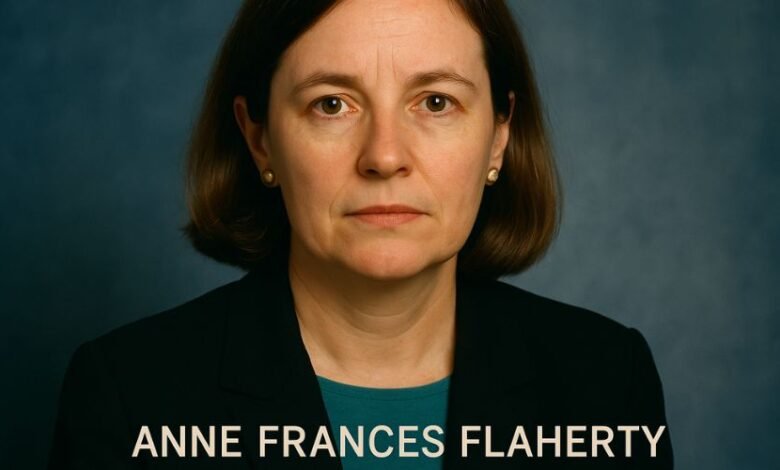
Anne Frances Flaherty is a name that often appears quietly alongside one of the most respected figures in international journalism, yet her own identity is far from defined only by association. Known primarily as a journalist and media professional in her own right, Anne Frances Flaherty represents a generation of women whose influence in journalism has often worked behind the scenes, shaping narratives, supporting major reporting careers, and contributing to the intellectual fabric of modern media without seeking the spotlight.
Her life reflects the intersection of personal dedication, professional discipline, and cultural awareness. While she has deliberately maintained a private public image, her role in journalism and her long-standing relationship with one of the most recognized foreign correspondents of modern times place her within the orbit of global reporting, historical documentation, and media ethics.
This article presents a well-rounded, respectful, and detailed portrait of Anne Frances Flaherty, focusing on her background, intellectual life, professional identity, values, and influence within journalistic culture.
Early Life and Educational Foundations
Anne Frances Flaherty was born into an Irish environment shaped by strong cultural traditions, storytelling heritage, and social awareness. Ireland in the mid-to-late twentieth century was a landscape of rapid political change, social transformation, and renewed emphasis on national identity. Growing up within such a climate naturally encouraged interest in current affairs, public discourse, and the written word.
From an early stage, Anne exhibited strong intellectual curiosity and an affinity for language and communication. Education played a central role in shaping her worldview. Her academic background, rooted in the humanities, emphasized critical thinking, literature, and public expression. These formative years built the foundation for her later work in journalism and media-related fields.
Rather than being driven by celebrity ambition, her early goals leaned toward meaningful engagement with society through writing and reporting. This approach would later define her professional tone: thoughtful, measured, and deeply observant.
Entry into Journalism and Early Career Development
Anne Frances Flaherty entered journalism during a period when the profession was undergoing important shifts. Newsrooms were evolving rapidly, with increased attention to investigative reporting, international coverage, and social accountability. For a woman entering journalism during this era, the challenges were significant. Media remained largely male-dominated, and women often had to work twice as hard to gain equal professional respect.
Despite these barriers, Anne established herself through persistence, clarity of thought, and an instinct for human-centered storytelling. Her early assignments involved reporting, editing, and research-based writing. Her work focused on clarity rather than sensationalism, and her reporting style reflected a balanced blend of observation, integrity, and cultural sensitivity.
Rather than pursuing celebrity journalism, Anne’s focus remained rooted in substance. She contributed to stories that required careful investigation and empathy, reinforcing journalism’s purpose as a public service rather than a performance stage.
Meeting Fergal Keane and Shared Journalistic Life
One of the most defining personal chapters in Anne Frances Flaherty’s life was meeting Fergal Keane, who would later become one of the most widely respected foreign correspondents in the world. Their meeting occurred in a professional setting where both were actively engaged in journalism. Their shared profession created an immediate bond grounded in mutual respect for truth, storytelling, and ethical reporting.
Their marriage developed not just as a personal partnership but as an intellectual alliance. Both understood the demands of the media world, including irregular hours, emotional strain from difficult stories, and the ethical responsibilities attached to international reporting. Anne’s background in journalism allowed her to understand the pressures of conflict reporting in a deeply personal way.
While Fergal Keane traveled widely covering wars, political upheavals, and humanitarian crises, Anne remained a steady intellectual presence, supporting not only the emotional weight of such work but also engaging in conversations about narrative framing, cultural context, and reporting responsibility.
Life in the Shadow of Global Reporting
Being married to a frontline international correspondent comes with a unique set of challenges. The emotional toll of conflict journalism, the constant uncertainty of safety, and the long periods of separation demand resilience. Anne Frances Flaherty navigated this reality with quiet strength and composure.
She maintained her own identity despite global attention frequently focusing on her spouse. Rather than seeking public visibility, Anne chose a path defined by stability, intellectual independence, and personal integrity. She played a vital role as a confidant, advisor, and emotional anchor during some of the most dangerous and demanding periods of international reporting.
Her ability to sustain a grounded personal life amid the turbulence of global journalism reflects her deep emotional intelligence and inner strength.
Professional Identity Beyond Public Attention
Anne Frances Flaherty’s professional identity is rooted in journalism and writing, but she never pursued celebrity status. Her work reflected a commitment to the essential values of reporting: accuracy, fairness, and reflection. Rather than establishing herself as a public-facing media personality, she preferred the quieter but no less significant role of contributor and intellectual participant.
Her journalistic work demonstrated strong editorial instincts, particularly in shaping narratives with clarity and ethical responsibility. She represented a model of journalism that values restraint over spectacle and understanding over shock.
In many ways, Anne belongs to a generation of journalists who considered the newsroom a civic institution rather than an entertainment platform.
Personal Values and Character
Those who have written or spoken about Anne Frances Flaherty often describe her as thoughtful, composed, and deeply principled. She is known for her discretion, preferring to let work speak rather than personal publicity. Her personality reflects a balance of intellectual rigor and emotional warmth.
Her values align strongly with the ethical foundations of responsible journalism. Truth, dignity, and humanity appear as guiding principles not only in her professional outlook but also in her personal life. Anne’s approach to public life shows that influence does not require noise. Instead, it can be exercised through quiet consistency and moral clarity.
Influence on Media Ethics and Cultural Awareness
Although Anne Frances Flaherty does not occupy a visible role in public debates about journalism, her influence operates through intellectual exchange and private consultation. Living alongside one of the most prominent international correspondents in modern history naturally placed her in ongoing discussions about war reporting, trauma, political narratives, and the moral responsibilities of journalists.
She represents the unseen contributors to journalism, the thinkers who help shape perspective, caution against simplification, and encourage deeper reflection. Her presence in this space highlights the collaborative nature of great journalism. Rarely is impactful reporting produced in isolation. It emerges through dialogue, questioning, and moral reckoning.
Privacy as a Conscious Choice
In an age of relentless media exposure and digital oversharing, Anne Frances Flaherty’s commitment to privacy stands out. She consciously chose not to transform her life into a public spectacle. This restraint itself reflects a philosophical stance toward fame and personal dignity.
Privacy does not indicate absence of influence. Instead, it shows a deliberate separation between public function and personal existence. Anne’s life demonstrates that meaningful engagement with society does not require constant public visibility.
Cultural Roots and Irish Identity
Anne Frances Flaherty’s Irish roots play a significant role in shaping her worldview. Ireland’s long tradition of storytelling, political discourse, and literary excellence strongly influenced her intellectual development. The Irish journalistic tradition emphasizes context, narrative depth, and moral engagement with history. These same values can be seen reflected in her professional approach.
Her identity as an Irish journalist connects her to a broader legacy of writers and thinkers who have used the written word as a tool for social understanding and historical accountability.
The Quiet Architecture Behind Prominent Journalism
While global audiences often focus on correspondents in the field, rarely does attention extend to the emotional and intellectual support systems behind them. Anne Frances Flaherty represents this essential but invisible architecture. Her role underscores the idea that major journalistic achievements are rarely solitary endeavors. They are sustained by networks of support, dialogue, and understanding.
Through emotional resilience, thoughtful counsel, and personal strength, Anne contributed to a journalistic legacy without requiring a public platform of her own.
Legacy and Contemporary Relevance
Anne Frances Flaherty’s legacy is not defined by headlines or awards but by influence, character, and example. In a media environment increasingly shaped by instant reactions and digital performance, her life offers a reminder of slower, deeper, and more reflective journalism.
She represents a generation that treated journalism as a moral vocation rather than a branding exercise. Her quiet professionalism continues to serve as a powerful example of integrity, balance, and intellectual independence.
Why Anne Frances Flaherty Still Matters Today
In today’s rapidly evolving media landscape, the values Anne Frances Flaherty embodies remain urgently relevant. These include commitment to truth without spectacle, intellectual humility, and emotional resilience in the face of global crisis. Her life story serves as a counterpoint to modern celebrity culture, reminding us that influence does not always demand visibility.
Her example resonates especially with young journalists who seek meaning beyond clicks and public approval. It affirms that dignity, restraint, and moral seriousness still hold lasting power in the world of communication.
Frequently Asked Questions About Anne Frances Flaherty
Who is Anne Frances Flaherty best known as?
Anne Frances Flaherty is best known as a journalist and as the wife of internationally respected foreign correspondent Fergal Keane, though she has always maintained her own professional identity.
Did Anne Frances Flaherty work in journalism herself?
Yes, she worked in journalism and media-related fields, contributing as a writer and editorial professional, although she preferred a low public profile.
Why is Anne Frances Flaherty not widely known in public media?
Anne Frances Flaherty deliberately maintained her privacy and did not pursue public recognition, choosing instead to work quietly within her profession.
What role did she play in Fergal Keane’s career?
She served as an intellectual and emotional support system, helping sustain the intense psychological demands of international conflict reporting.
Is Anne Frances Flaherty still active in journalism today?
There is no clear public record confirming her current professional activity, as she remains highly private and avoids public documentation.